
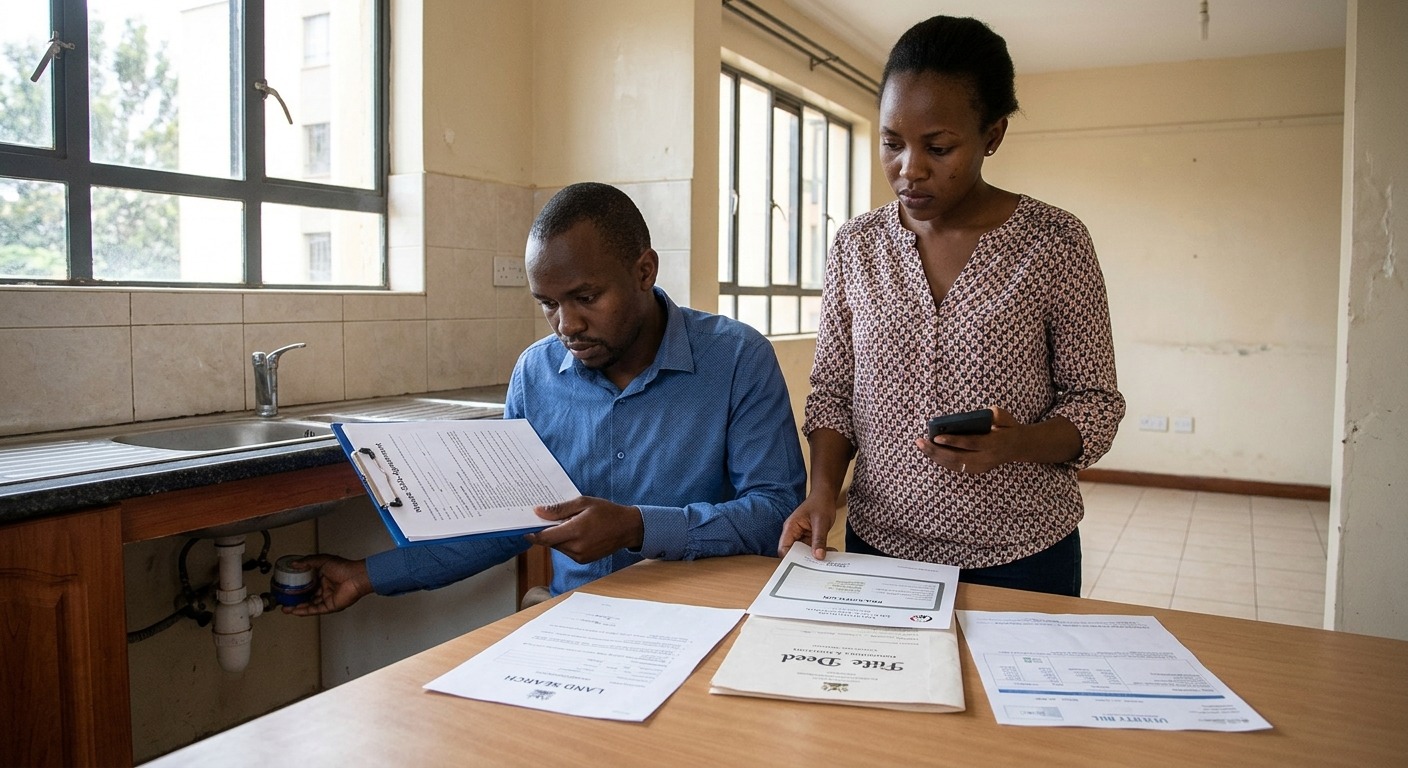
Paying a house deposit is a significant financial step towards homeownership or securing a long-term lease. In the Kenyan real estate market, this transaction is a critical juncture where buyers and tenants face maximum risk. Rushing to pay a deposit without performing comprehensive due diligence is the fastest way to lose money. To safeguard your investment, you must approach the closing phase with extreme caution and critical scrutiny.
Here is a definitive checklist of precisely what you must verify before any money leaves your account for a house deposit in Kenya.
1. Verify the Title Deed (Real Estate Due Diligence)
The ultimate proof of ownership is the Title Deed. Do not rely on verbal assurances or photocopies. As a potential buyer, you must perform a mandatory official Land Search at the relevant Ministry of Lands registry (the process is now largely digitized via the e-Citizen platform through ArdhiSasa).
What to check for: Confirm that the name on the search matches the seller’s identification. Crucially, the search will reveal if the property has any encumbrances, such as active charges (bank loans/mortgages) or caveats/disputes that might legally block the transfer of ownership. If it is a leasehold property, verify the remaining term on the lease. For apartments or sections within a larger complex, ensure you are verifying the specific sectional title or the mother title and the corresponding sub-lease agreement.
2. Authenticate the Seller’s Identity
A growing vector for real estate fraud is identity theft, where imposters pose as landowners.
What to check for: Demand and verify the seller’s original National ID (or passport) and KRA PIN certificate. You can cross-reference the PIN via the KRA iTax portal to ensure the entity or individual exists and matches the land ownership records. If you are dealing with a company or developer, perform a search at the Companies Registry to confirm the company is active, its directors, and that the individual signing the sale agreement has the legal power (resolution) to do so.
3. Inspect the Sale Agreement (Legal Review)
Never pay a deposit based on a handshake. The Sale Agreement is the legally binding document that governs the entire transaction. Before paying the deposit, which is typically 10% of the purchase price, you must review the terms.
What to check for: Ensure the document clearly outlines the full purchase price, the deposit amount, the payment schedule, and the deadline for the completion of the sale (typically 90 days). Crucially, scrutinize the “escape clauses” or “forfeiture clauses.” What happens if your mortgage financing fails? Does the contract state that the deposit is refundable (minus administrative costs), or is it non-refundable? This document should be reviewed and witnessed by a certified conveyancing lawyer representing your interests.
4. Confirm the Condition of the Property (Physical Due Diligence)
A property might look perfect during a casual walkthrough, but “hidden costs” often emerge later.
What to check for: While a formal structural survey is advisable, you must inspect the house critically. Are there signs of serious dampness, foundational cracks, or leaking roofs? Critically, confirm the functional availability of utility connections: water (especially the consistency of supply and source), electricity, and sewer connections. In some developments, “hidden costs” in the form of service charges for security, amenities, and waste management are significant; verify these monthly obligations before committing.
5. Demand a Formal Receipt
In the event of a dispute, your primary evidence will be proof of payment.
What to check for: When paying the deposit, prioritize traceable payment methods. Bank transfers (RTGS) or banker’s checks are ideal as they create a robust audit trail. Do not pay the full deposit in cash. Upon receipt of the funds, the seller (or their lawyer) must issue a formal, signed receipt referencing the specific property (LR Number or Sectional Title Number), the exact amount received, and what the payment is for (e.g., “10% deposit for House A4”).
Conclusion
In Kenya, a house deposit is legally considered “earnest money,” demonstrating your commitment to the purchase. Once paid, it often becomes difficult or costly to recover if you attempt to back out without valid legal grounds provided in the contract. Protecting yourself requires rigorous verification, not trust. By systematically checking the Title Deed, verifying the seller, vetting the sale agreement, inspecting the property physically, and securing a proper receipt, you move from a position of vulnerability to one of informed security.
