
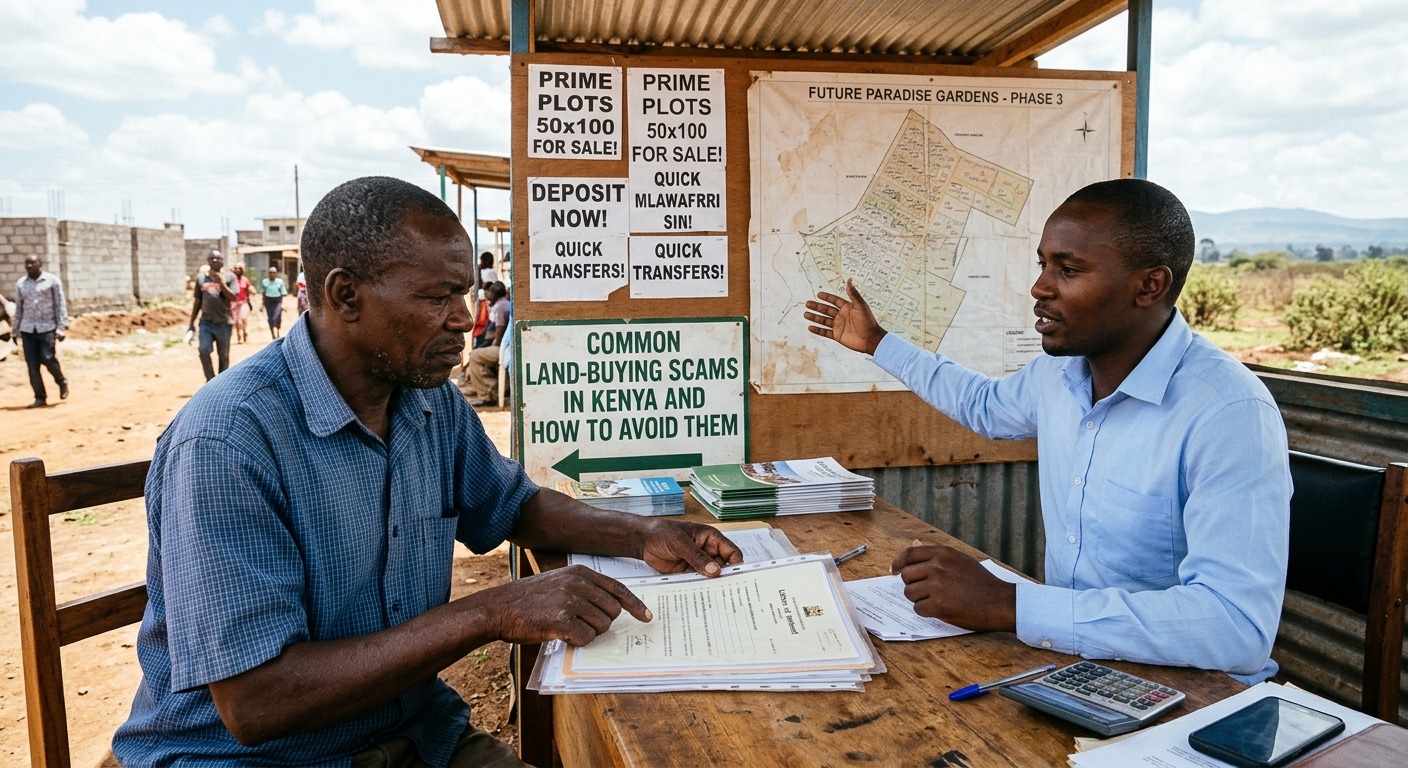
“The dream of land ownership in Kenya is powerful, but without unwavering vigilance and rigorous due diligence, that dream can instantly vanish, replaced by the crushing reality of financial loss and legal nightmares.”
Buying land in Kenya is a significant milestone, representing security, investment, and often, a family legacy. However, this high-stakes environment attracts sophisticated fraudsters. For every genuine opportunity on BuyNRent, there are countless scams designed to exploit eager buyers. Understanding these common schemes is not optional; it is the essential first step in protecting your hard-earned money and ensuring your investment is secure.
While BuyNRent strives to maintain a transparent marketplace by connecting seekers with reputable agents and owners, we cannot overemphasize the necessity of personal diligence. The Kenyan real estate sector, particularly land, requires a ‘verify first, pay later’ mindset. Ignoring red flags or rushing due process can have devastating consequences.
The Most Prevalent Land-Buying Scams
Fraudsters are creative, constantly refining their tactics. Knowing their methods is your best defense.
The ‘Double Sale’ Deception: This classic scam involves the same piece of land being sold to multiple unsuspecting buyers. The fraudster, often possessing a genuine (or expertly forged) title deed, collects deposits from several people simultaneously before disappearing.
Forged Documents and Identity Theft: Scammers generate fake title deeds, registry search results, and land rates receipts that are nearly indistinguishable from the originals. In some cases, they even impersonate the legitimate landowner using stolen identity documents to execute the sale.
Selling ‘Air’ (Non-Existent Land): This occurs when fraudsters advertise plots that either do not exist, are located inside protected forests or riparian reserves, or are public utility lands (like road reserves) that cannot be legally owned by individuals. They rely on buyers not conducting physical site visits.
The Distress Sale Urgency Trap: “Must sell today due to medical emergency!” Rushing a sale is a massive red flag. Fraudsters create false urgency to pressure buyers into skipping essential due diligence steps like an official search, hoping you will prioritize the ‘deal’ over verification.
Phantom Agents and Fake Companies: Sophisticated cartels operate as legitimate-looking real estate companies with professional websites and offices. They ‘sell’ subdivision projects (often on leased land they don’t own) and vanish once significant deposits are collected.
Critical Steps: How to Avoid Becoming a Victim
Protecting your investment requires unwavering commitment to the correct procedures, regardless of how trustworthy the seller seems.
“A genuine transaction is never threatened by due diligence. Anyone pressuring you to skip official verification is almost certainly trying to hide something.”
Your safety checklist must always include:
Conduct an Official Land Search: Never rely on a copy provided by the seller. Obtain a fresh, official search directly from the relevant Land Registry yourself to confirm the current registered owner, encumbrances (charges or cautions), and exact acreage.
Verify the Seller’s Identity: Insist on meeting the registered landowner in person. Verify their original National ID or Passport against the details on the title deed and search certificate. If they are represented by an agent, verify the agent’s Power of Attorney.
Physical Site Visit and Boundary Verification: Never buy land sight unseen. Visit the plot personally. Engage a registered surveyor (independent of the seller) to confirm the boundaries match the official subdivision map (mutation structure) and that the beacons are correctly placed.
Confirm Land Rates and Taxes: Verify that all land rates and rent are fully paid up. Outstanding debts transfer to the new owner, potentially costing you hundreds of thousands.
Use Registered Professionals: Always engage a registered lawyer to handle the conveyance process (sale agreement, transfer documents) and ensure funds are held in escrow until completion. Use only registered surveyors and reputable, verified real estate agents found on platforms like BuyNRent.
Trust Your Instincts (and Walk Away): If a deal is too good to be true, it is. If the seller creates excessive urgency, demands cash payments outside legal channels, or discourages professional verification, terminate the transaction immediately. Your financial security is more important than a perceived ‘bargain.’
“At BuyNRent, our value of Trust means advocating for transparency and due diligence in every interaction. We encourage you to use our tools for discovery, but always verify before you commit.”
The path to secure land ownership in Kenya is well-defined. By understanding these common scams and strictly adhering to the recommended verification steps, you can confidently navigate the market. The dream of owning land is achievable, but it must be built on a foundation of rigorous, personal due diligence.
Perfect Image for This Article
Note: The generated image must align with the requested constraints.
Image Description: A gritty, documentary-style photograph capturing an older Kenyan man (left, skepticism evident on his face, wearing a plain button-down shirt) pointing at legal documents spread across a rustic wooden table. Across from him, a slightly younger, smooth-talking man in a polo shirt (right, perhaps looking too eager) gestures towards a laminated, hand-drawn site map pinned to a display board behind them, which is labeled ‘FUTURE INVESTMENTS’ in faded marker. They are at a temporary, dusty site office under a corrugated metal roof near Ruiru. Behind the smooth-talking man, a weathered sign is clearly visible: “COMMON LAND-BUYING SCAMS IN KENYA AND HOW TO AVOID THEM.” A stack of official-looking ‘Search Certificate’ application forms is prominent near the older man’s hand. The background shows raw land development and some onlookers, suggesting a real, unpolished transaction environment.
